
What French Agnostics Taught Me About Faith

In 2019, I facilitated twenty-four focus groups in research facilities across France (Paris, Lille, Lyon, and Bordeaux). In each group, I asked forty-nine self-identified agnostics to do something unusual: choose images from a whimsical card game called Dixit to represent what they believed a “Higher Power” would be like based on their life experience, and then choose another image to represent what they wished that “Higher Power” could be. The conversations that followed were some of the most bizarre, profound, and unexpectedly beautiful discussions I have ever facilitated in two decades of market research. I believe that what emerged from those conversations reveals a truth that should fundamentally reshape how Western evangelicals think about ministry in France.
Why We Needed This Research
TopChrétien, a French organization dedicated to reaching France through internet-based evangelism, approached my firm Clarity Research at the end of 2018 with a complicated problem. They had successfully developed outreach materials targeting specific segments of French society, but French agnostics posed a uniquely difficult challenge.
The religious landscape of France is extraordinarily complicated. Research indicates that at least 29% of the country’s population identifies as atheist and 63% as non-religious. Another study from Pew Research shows that 46% of France’s population are “non-practicing” Christians, and another 28% are “religiously unaffiliated.” The consistent conclusion is sobering: most of the population of France is religiously ambiguous. They have some sort of cultural or religious rooting in a religious system but with no commitment to that worldview. While most French people have some religious affiliation on paper, they are functionally atheists who live their daily lives as if there is no God.
Finding a single strategy to reach this population is simply unrealistic. The agnostic in France varies from the young feminist cultural Muslim to the new age mystical cultural Catholic to atheists trying to find transcendence through Eastern philosophy. The only common thread is that they are unsure if there is a God that they or anyone else could personally know. Furthermore, they have committed to living a life as though there is no God at all. What we needed was a map—a way to understand the many potential pathways from a wide variety of agnostic worldviews toward a place of knowing God with certainty. We called this map “The Labyrinth.”
How We Listened
We took an unconventional approach. Rather than traditional focus groups of eight to twelve people, we conducted intimate facilitated discussions with just one to four respondents at a time. This smaller format encouraged open and frank discussion without anyone dominating the conversation, and it allowed for the deeper and more vulnerable conversation that this nuanced topic demands.
The heart of the research involved asking participants to select images from Dixit cards—whimsical, complicated images useful for provoking creative thoughts and emotions. Each participant chose two images: one representing what they believed a “Higher Power” would be like based on their life experience, and another representing what they believed a “Higher Power” should be like in their ideal world.
We recorded, transcribed, and analyzed every conversation. From those discussions, we identified 917 quotes from all 49 respondents and sorted them into 81 distinct topics, which we then grouped into fifteen themes that reflect general states of mind and heart. These themes ranged from “The Distant” (farthest from the Kingdom of God) through “Embarking,” “Journey,” and “Closer” stages, ultimately leading to “The Kingdom”—the point where the gospel message can flow and be heard without competing beliefs that typically hinder agnostics from making a decision to follow Jesus. What emerged was genuinely surprising. Three discoveries in particular upended our assumptions about how to reach France.
Surprise #1: Trusting Older Generations
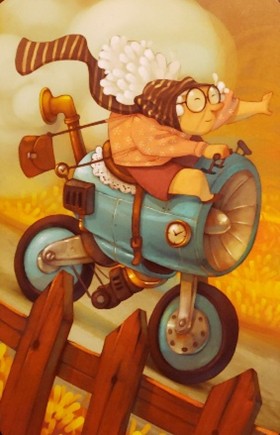
In an age where youth culture dominates, we discovered something remarkable among French agnostics: age equals credibility. They demonstrated a consistent belief that the most trusted companions are those with the type of life experience that only comes from age. This finding flies in the face of most contemporary Western evangelical strategy, which tends to prioritize peer-to-peer ministry and young, relatable voices. But French agnostics are looking for wisdom that has been tested by time. They want guides who have navigated the complexities of life and can speak from a place of earned authority. The implication is profound: the very demographic that many ministries have sidelined—older believers with decades of life experience—may be precisely who French agnostics are most willing to hear from.
Surprise #2: They Want God to Pursue Them Like a Fox

In one of the Paris discussion groups, a woman named Anne did something that upended my assumptions about ministry in Western Europe. When asked to select an image representing what she wanted a higher power to be like, she chose the picture of a fox pursuing a mouse through a field of wheat. She was aware—and perhaps a little proud—of selecting this contrary image. As Anne explained her choice, she said that we cannot presume the intentions of the fox. Even though she believed that god was everywhere, she chose to define him in the specific image of a pursuing fox that would desire to have her as his own.
This theme emerged repeatedly: “I want to be wanted.” French agnostics have a deep desire to be pursued by someone or something greater than themselves. One woman named Livia in Paris selected the image of a fisherman to represent the ideal God, explaining, “Dieu est le pêcheur, et vous, vous êtes le poisson donc, maintenant, vous pouvez dire c’est Dieu qui vous cherche, vous” (God is the fisherman, and you, you are the fish, so now you can say it’s God who seeks you).
The language is strikingly similar to Jesus telling his disciples, “Follow me, and I will make you fishers of men.” But the Western evangelical approach often emphasizes the seeker—we tell people to seek God, to come to God, to choose God. What French agnostics are actually longing for is to experience being sought. This is not a passive desire. It is the ache to be seen, to be known, to matter enough to a transcendent being that He would actively pursue relationship. And it reveals a pathway for ministry that emphasizes God’s relentless pursuit of humanity rather than demanding that seekers initiate the chase.
Surprise #3: They Want God to Be Dangerous Like a Wolf
Perhaps the most striking discovery came from a woman named Elissa in our first Paris focus group. When asked to select an image representing the god she wished existed, she chose a picture of a menacing wolf dining with a small rabbit. This is the same image at the top of this post.
At first glance, the image seems threatening, even disturbing. But as Elissa described her choice, something profound emerged. Because the world is an evil and dangerous place, she longed to have a god that is greater than the world and has the power to protect her. She described this god as a type of protective father—powerful, just, and even fearsome.
She explained: “Comme, justement, comme un père qui serait là, justement pour… pas forcément pour me dire mais pour me regarder, me… regarder si… mes gestes, c’est-à-dire… Et là, en fait, je ne me sentirais pas rassurée, je me dirais est-ce que je fais bien ou est-ce que je fais mal ?… Je lui demanderais si mon attitude lui plaît” (It would be like having a father there, precisely to… not necessarily to tell me something, but to watch me, to… observe my actions… and in that situation, I wouldn’t feel reassured; I would wonder if I’m doing things right or wrong… I would ask him if he approves of my behavior.).
This is not the safe, domesticated God of Western prosperity gospel. This is Aslan in Narnia—good, but not safe. Not a meek and passive “Higher Power,” but a powerful god who is fearsome enough to protect the vulnerable and strong enough to set things right in a world that feels fundamentally broken and unfair.
Western evangelical messaging often emphasizes God’s love, mercy, and gentleness. These are true and essential attributes. But French agnostics living in a world that they perceive as dangerous and evil are not primarily looking for a comforting God. They are looking for a God with teeth—one powerful enough to matter in the face of real evil.
The Labyrinth and the Trinity
As we mapped the fifteen themes and eighty-one topics, a pattern emerged that was both ancient and surprising. The three themes immediately adjacent to “The Kingdom”—the center of the Labyrinth—correspond to the three persons of the Trinity.
The Missing Parent theme reflects the longing for God the Father. French agnostics expressed deep desires for relief, protection, provision, expertise, and justice—longings that would usually be met through loving parents. Given the high incidence of divorce and single-parent homes in France, this theme carries particular weight. Topics like “I need a father” and “I want a mother” revealed soul-deep aches for parental love that many never experienced.
The My People theme reflects the fraternal nature of God the Son, Jesus. Those driven more by mind and rationality looked to community and peers to help them understand the nature of a “Higher Power.” They sought trusted companions—friends, diverse voices, opposing perspectives, and those with credibility earned through age and presence. This is the Immanuel longing: the voice of a friend is only valid if they are physically present.
The Supernatural theme reflects the Holy Spirit. These were agnostics who, in their quest for something more, made the decision to leave the rational and natural world behind to engage the supernatural. They looked for miracles, consulted with dead relatives through mediums, and sought a positive energy or force that transcends the material world.
The evolutionary psychologist Jordan Peterson describes the Trinity as “glimpses of the transcendent ideal”—the spirit of tradition (Father), human beings as the living incarnation of that tradition (Son), and the spirit in people that makes relationship with the spirit possible (Holy Spirit). What we discovered is that French agnostics naturally organize their spiritual longings around these same three archetypal approaches to the divine.
What This Means for Christian Ministry
The Labyrinth is not just an academic exercise; it is intended to be a practical tool for ministry collaboration and strategy. Different ministries have different strengths for helping agnostics through different parts of their spiritual journey. One ministry might excel at helping someone through the themes of “There is More,” “Liberty,” and “Knowledge,” while another ministry might be better equipped to guide someone through “My People” and into “The Kingdom.” Overall, the vision is for an interactive map that can guide personal and corporate evangelism strategy in France—a framework for effective collaboration where ministries can work together, each contributing their unique strengths to help individuals progress toward relationship with Christ.
But the broader lesson transcends France. What this research reveals is that we must listen before we speak. We must understand the actual spiritual journeys people are on, not impose the journey we assume they should take. We must meet people where they are with the God they actually need, not the version of God that is easiest for us to present.
French agnostics are not asking for a safe, suburban God who fits neatly into a thirty-minute evangelism presentation. They are asking for a God who is wise like their elders, who pursues them like a fox, and who is dangerous like a wolf. They are asking, whether they know it or not, for the God who actually exists—the one whose wisdom predates the foundations of the world, who relentlessly pursues His beloved, and who has the power to defeat evil and death. The question is not whether we are willing to present that God; the question is whether we are willing to listen long enough to discover how.
The Voix Agnostique research was conducted in partnership with TopChrétien, Impact France, and Agape. Special thanks to the team who made this work possible, especially Charly Moontien and Nathalie Almont. The full research report and summary are available under a Creative Commons license. If you’re interested in learning more about The Labyrinth or applying these insights to ministry in France or elsewhere, feel free to reach out.
 Clarity Research